BMX Race Bars
The command center for your victory: The right BMX Race handlebars determine your posture at the gate and control in the berms. From ultra-light aluminum bars without a crossbar for the smallest riders (Mini/Junior) to indestructible CrMo bars for Pro riders, we offer the exact geometry that fits your body size. Pay attention to the material and height so you don't waste any power.
BMX Race Bars FAQBMX Race Bars Range

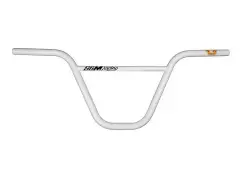
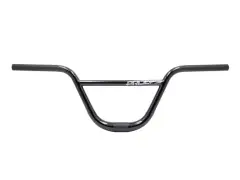

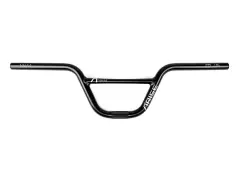
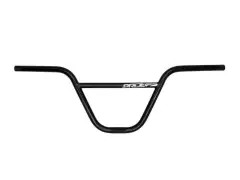
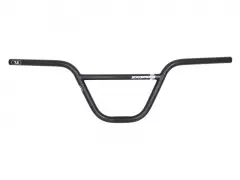
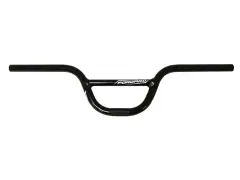
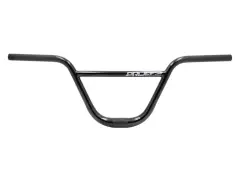


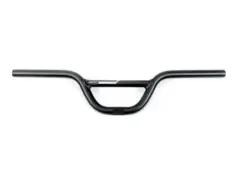
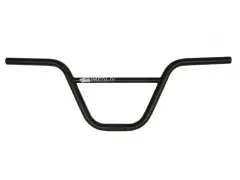
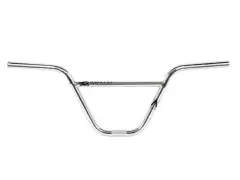

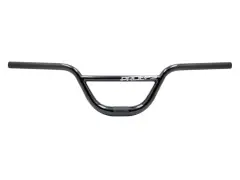
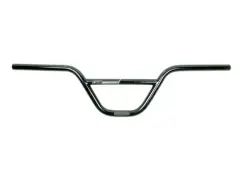
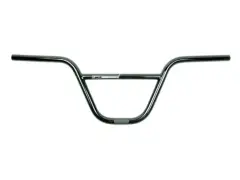
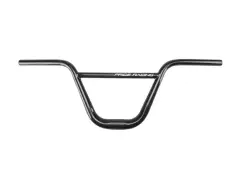
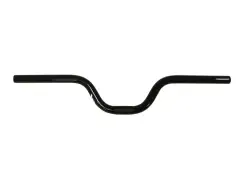
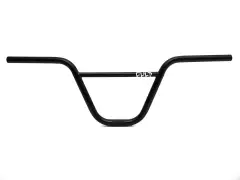
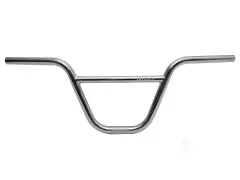
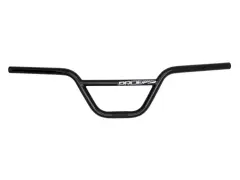
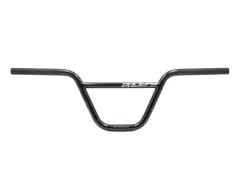

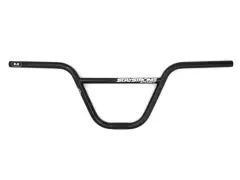
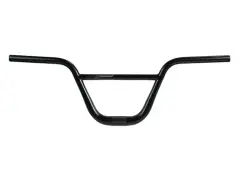
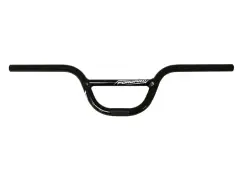
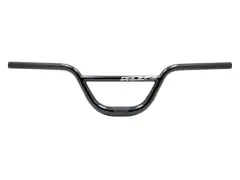
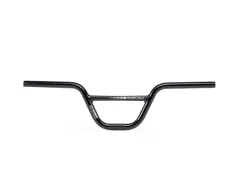

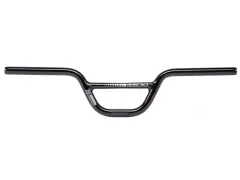
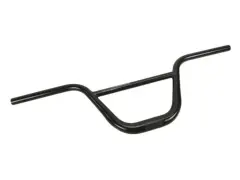
BMX Race Bars FAQ
What defines BMX Race Handlebars?
Unlike freestyle bars, BMX Race handlebars are designed purely for ergonomics, power transfer, and low weight. The geometry is often slightly flatter (less backsweep) to put the rider in an aggressive attack position. Crucial here is the strict distinction of types based on the rider's age and weight class.
How are handlebars constructed?
- Clamping Area
- The area where the stem grips the bar. Standard is 22.2mm, but modern race bars increasingly use "Oversized" 31.8mm for more stiffness.
- Grip Area
- Where the grips and brake lever are mounted (Standard diameter 22.2mm).
- Crossbar
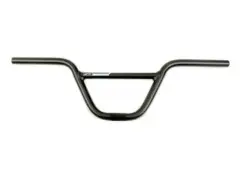
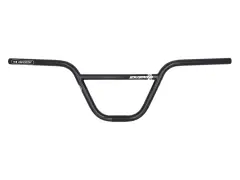
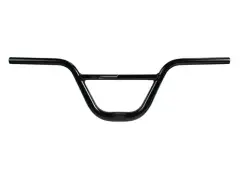
- Connects the two sides for stability. Note: This is often deliberately missing on very small sizes.
What types are there? (Crossbar vs. No-Crossbar)
The design depends directly on the height (Rise):
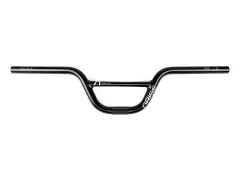
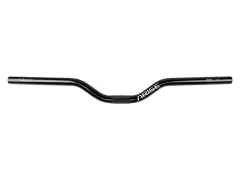
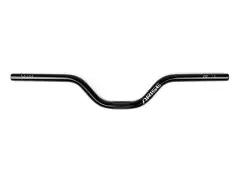
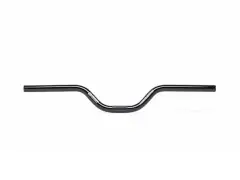
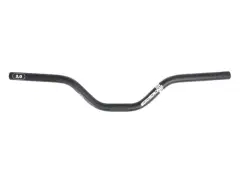
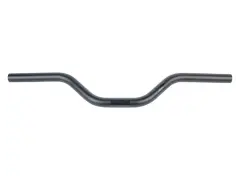
- Without Crossbar (for Mini / Junior)
- On the smallest bikes (Micro Mini, Mini), the bars are very low (often only 2 to 4 inches high). A crossbar would not fit here and would add unnecessary weight. These bars are mostly made of aluminum.
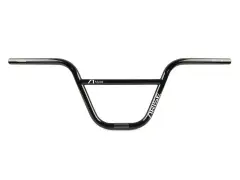
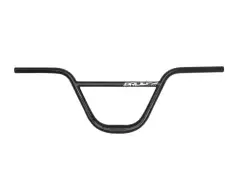
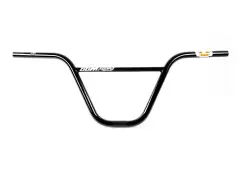
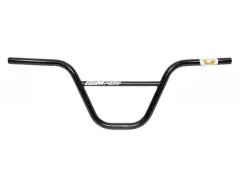
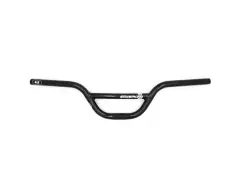
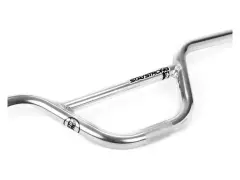
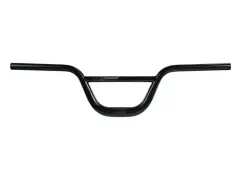
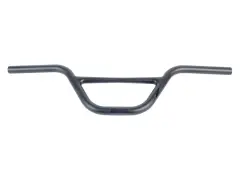
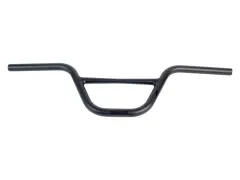
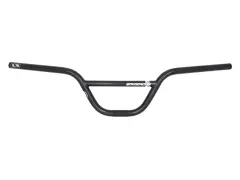
- With Crossbar (Expert / Pro and up)
- As soon as the bar gets higher (from approx. 5.5 inches), a crossbar is mandatory to absorb leverage forces and prevent bending.
What materials are used?
The material dictates the weight and the permissible load:
- Aluminum (6061-T6)
- Standard for kids (Micro to Expert). Extremely light, but not suitable for heavy riders or pro-level jumps, as aluminum can break faster than steel when overloaded.
- 4130 CrMo (Steel)
- The standard for adults (Pro Size and larger). Steel is more elastic, dampens shocks better, and tends to bend rather than snap suddenly. Slightly heavier, but maximally stable.
- Carbon
- High-end material for maximum stiffness at minimal weight. Mostly found in the pro sector.
Which handlebar fits me?
The handlebar height must match the frame size and your body height. A bar that is too high pulls you too far back at the start (risk of wheelie), a bar that is too low costs you visibility.
| Category | Typical Height (Rise) | Material Recommendation |
|---|---|---|
| Micro Mini | 2.0" - 2.5" (often without crossbar) | Aluminum |
| Mini | 2.5" - 3.5" (often without crossbar) | Aluminum |
| Junior | 4.0" - 5.0" | Aluminum |
| Expert | 5.5" - 6.5" | Aluminum |
| Expert XL / Pro | 7.0" - 8.0" | CrMo Steel (or Carbon) |
| Pro XL / XXL | 8.0" - 9.0" + | CrMo Steel (or Carbon) |
| Cruiser (24") | 5.0" - 6.0" (flatter, as front wheel is higher) | CrMo Steel |
How do I install the handlebars correctly?
- Clean the clamping area of the stem and handlebars (grease-free!).
- Insert the handlebars centrally and align them parallel to the fork (aligning with the fork angle is standard in racing).
- Tighten the 4 bolts of the stem in a cross pattern ("X-pattern") step by step so that the gap at the faceplate is even everywhere.
- For carbon bars, you must use assembly paste and a torque wrench!
What do the specifications mean?
| Term | Explanation | Examples/Available |
|---|---|---|
| Rise | The height difference from the clamping area to the grip end. The most important measurement. | 2.0 inches to 9.5 inches |
| Clamping Diameter | Must match the stem exactly! Older/Standard bars have 22.2mm, new stiff models often 31.8mm. | 22.2mm, 31.8mm |
| Backsweep | The bending of the bar backwards (towards the rider). Race bars often have less backsweep (straighter) than freestyle bars. | 6° - 11° |
| Upsweep | The bending of the grip ends upwards. Ensures an ergonomic hand position. | 1° - 3° |