Bars

Total control starts here: The BMX handlebar dictates your ride feel and posture. Not sure if a 9-inch or 10-inch bar suits you better, or what the difference is between 22.2mm and 25.4mm clamping? Below we explain all the specs to help you find the perfect setup for your style.

Bars FAQ

Bars stuff

  • Manufacturer
  • Color
  • Height
  • Bar Design
  • Backsweep
  • Upsweep
  • Bar Clamp Ø
  • Bar Width
  • BMX Discipline

Bars FAQ

What is a BMX Handlebar and what is its main purpose?

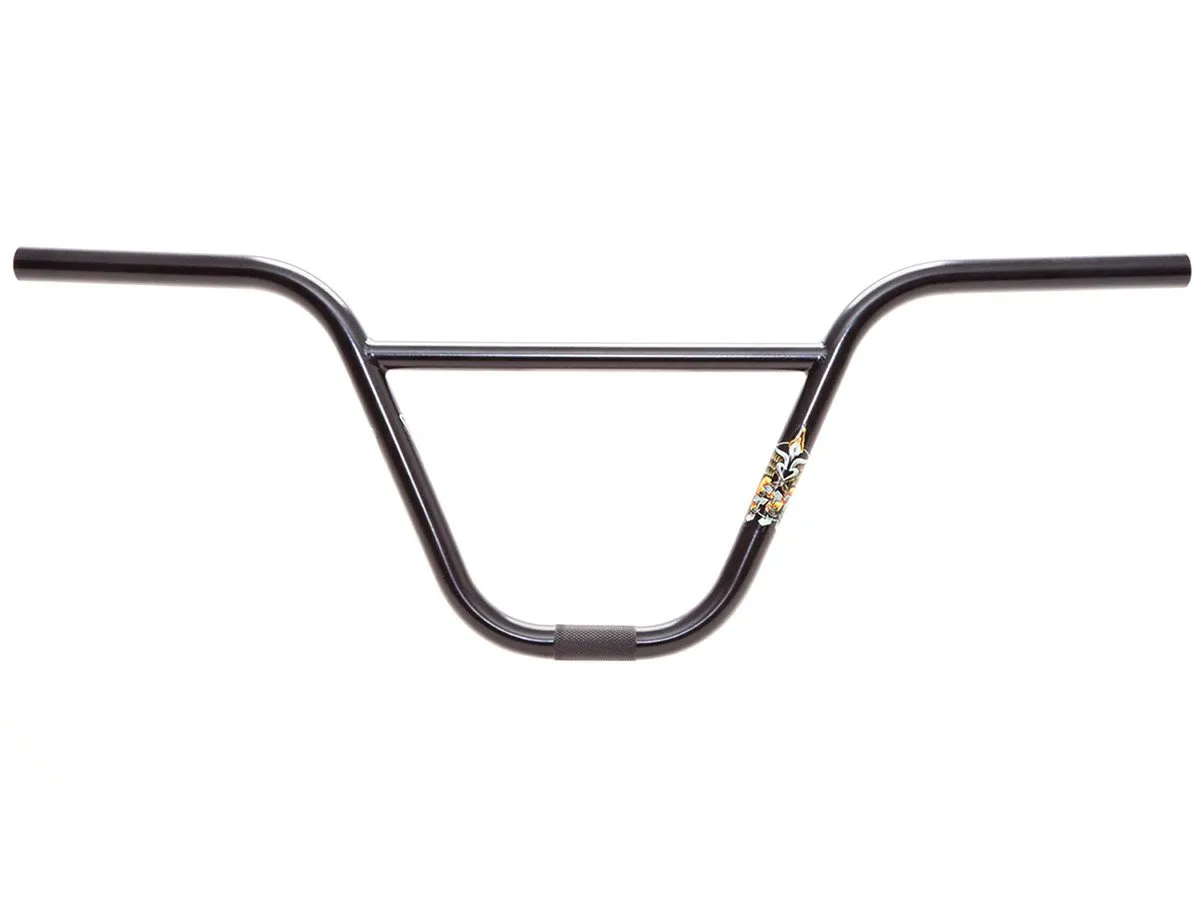
The BMX handlebar is the steering component of your bike. It provides the leverage needed to pull up the front wheel for bunny hops and manuals, and it's crucial for steering precision. The geometry (height, width, angles) dictates your body position on the bike—upright and relaxed or low and aggressive.

How is a BMX handlebar constructed?

Understanding the different zones of a handlebar helps you choose the right one. Here is the breakdown:

Grip Area
  • The outer ends of the bar where you mount your Grips and brake levers.
  • Standard diameter is almost always 22.2mm (7/8"), regardless of the stem clamping size.
Clamping Area
  • The center part of the bar that connects to the stem.
  • Usually features "knurling" (a rough, cross-hatched texture) to give the stem better bite and prevent the bar from slipping forward or backward.
Crossbar
  • The horizontal tube connecting the two sides (up-sweeps) of the handlebar.
  • Adds essential structural strength to withstand the forces of hard landings and pulls.
Butted Tubing
  • Many high-end bars use "multi-butted" tubing.
  • This means the wall thickness varies internally: thicker at high-stress points (bends and clamping) and thinner in straight sections to save weight without sacrificing strength.

What types of BMX handlebars are there?

2-Piece Bars
The classic design consisting of two tubes: the main tube (bent for the grips and clamping) and the crossbar. Generally lighter and cleaner looking.
4-Piece Bars
Consist of four tubes: two vertical side tubes, a crossbar, and a bottom clamping tube. This design is stiffer and very popular in Street riding for its rugged, "boxy" look.

What materials are used for BMX handlebars?

4130 CrMo (Chromoly)
The gold standard for BMX bars. It is significantly stronger and more durable than Hi-Ten steel and absorbs vibrations better.
Titanium
The premium choice for weight savers. Titanium bars are ultra-light, rust-proof, and offer a unique flex feel, but come at a higher price point.
Heat Treatment
A process applied after welding (often called "Post Liquid Heat Treated") to align the steel's grain structure. This makes the bar much more resistant to bending and snapping.

Which BMX handlebar is the right one for my needs?

Choosing the right bar depends on your height and riding style. Here are the key specs currently available in our shop:

Spec Recommendation / Availability
Rise (Height)
  • 5.75" - 8.0": For smaller riders (approx. 130-150cm), Kids Bikes, or Race setups.
  • 8.25" - 9.0": The classic all-round height. Good control for riders around 160-175cm.
  • 9.0" - 10.0": The most popular range for Street and Park. Great for riders 175cm+; makes pulling up easier.
  • 10.0" - 12.0": For tall riders (185cm+) or those who prefer a very upright posture.
Clamping Ø
  • 22.2mm: Standard. Fits most stems.
  • 25.4mm (OS): Oversized "Gorilla Grip". Requires a 25.4mm stem! Offers max clamping power.
Width Available from 25.2" to 31". Rule of thumb: Shoulder width + a bit extra. Can be cut down with a pipe cutter.

How do I install a BMX handlebar?

  1. Remove the faceplate of your stem (4 bolts).
  2. Clean the clamping area of the stem and the new handlebar. Remove grease or oil to prevent slipping.
  3. Place the bar in the stem and loosely re-attach the faceplate.
  4. Align the bar center with your fork and adjust the angle (typically parallel to the fork angle or slightly forward/vertical).
  5. Tighten the 4 bolts in a cross pattern (top-left, bottom-right, etc.) to ensure even pressure. Ensure the gap between faceplate and stem body is equal on top and bottom.

How do I maintain and care for my BMX handlebar?

  • Check for cracks regularly, especially around the welds of the crossbar and the bends.
  • Ensure your Bar Ends are installed! Open tube ends act like cookie cutters in a crash.
  • If you ride unpainted steel bars (Raw), check for rust and keep them dry. Titanium needs no special care.

How do I identify and fix common problems with my BMX handlebar?

  • Handlebar slips forward/backward: Usually due to loose bolts, uneven tightening, or grease on the clamp. Clean everything and re-tighten in a cross pattern. If the knurling is worn smooth, you might need a new bar.
  • Bent bars: If your bar is bent from a crash, replace it. Do not try to bend it back, as the material structure is weakened and could snap under load.

What do the specifications mean?

Feature Description Available Options
Rise (Height) Vertical height from the center of the clamping area to the center of the grip area. Range: 5.75" to 12.0" (popular: 9", 9.5")
Width Total width from end to end. Can be cut down. Range: 25.2" to 31"
Backsweep The angle the bar bends back towards the rider. Affects wrist comfort. (straight) to 14° (curved)
Upsweep The angle the bar bends upwards at the ends. to
Clamping Ø Diameter at the stem connection. Must match stem. 22.2mm (Standard) or 25.4mm (Oversized)
Design Number of tubes used to construct the bar. 2-piece (Classic) or 4-piece (Street Style)
Color Look of the bar. Chrome, Black, Oilslick, Raw, etc.
/* Explanation Add on Script for Beginner & Kids Bikes */

Recently Viewed Products