
Your region changed. Please be aware that prices, taxes and shipping-costs may be different now!
MTB Seats
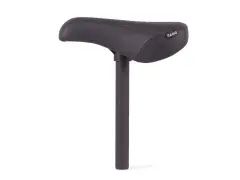
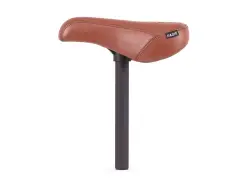
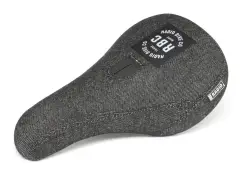
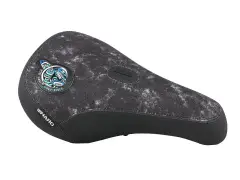
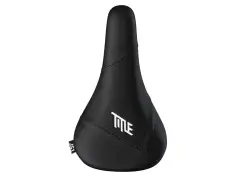
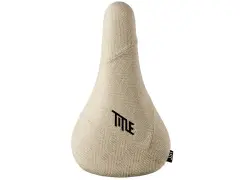
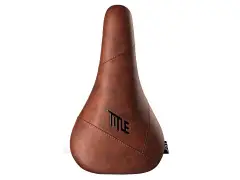
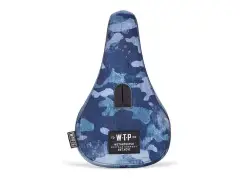
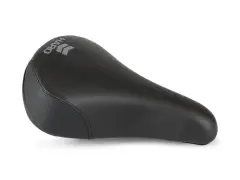
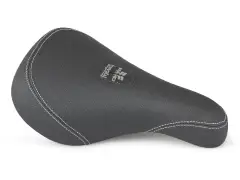
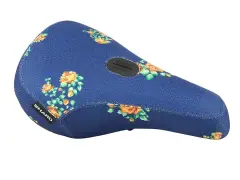
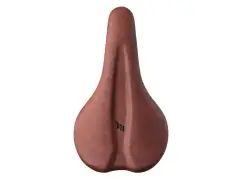
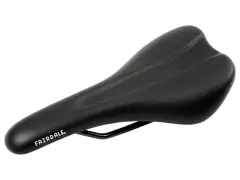
In Dirt Jumping, you rarely sit down – the saddle is primarily for control. It needs to be grippy so you can pinch it with your knees during barspins or no-handers. Here you will find robust Pivotal, Tripod, and Combo saddles with grippy covers made of Kevlar or Vinyl.
MTB Seats FAQMTB Seats Range








MTB Seats FAQ
What is an MTB Dirt saddle and what is its main purpose?
On Dirt Jump and Street bikes, the saddle is primarily a contact point for tricks. It helps you stabilize the bike in the air. That's why these saddles are often short, thickly padded ("Fat"), and angled steeply upwards to make pinching with the knees easier.
What mounting systems are there?
- Pivotal
- The standard in DJ. The saddle is fixed to the post with a single bolt through a rubberized opening on the top.
Advantage: Angle individually adjustable, very strong, light. - Tripod
- Fixed via three points (one bolt, two supports).
Advantage: Very clean design (no hole on top), extremely light.
Disadvantage: Angle only adjustable in two steps. - Rails
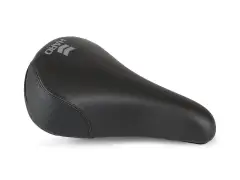
- The classic MTB system with two metal rails.
Advantage: Fits standard seat posts, large adjustment range fore/aft.
Disadvantage: Rails can bend during hard crashes.
Which shape do I need?
- Fat / Mid: Thick padding. Perfect for barspins as you can pinch the saddle well between your knees. Also offers protection during botched landings.
- Slim: Thin padding. Looks very sporty and saves weight, but offers less grip for tricks.
What do the specifications mean?
| Specification | Explanation | Examples/Available |
|---|---|---|
| System | Must match the post! | Pivotal, Tripod, Rails |
| Padding | Thickness of foam. | Fat, Slim |
| Material | Cover fabric. | Kevlar (tough), Vinyl (grippy) |