BMX Race Brakes
Control your speed precisely and stay safe with high-performance BMX Race Brakes. Whether you need a classic V-Brake for your Junior bike or a powerful Hydraulic Disc Brake for your Pro frame – we stock top systems from Shimano (DXR, SLX, XT) and Box. Crucial: Check your frame mounts before buying (Cantilever Studs vs. Disc Tabs)!
BMX Race Brakes FAQBMX Race Brakes Range
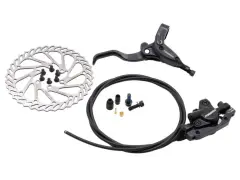

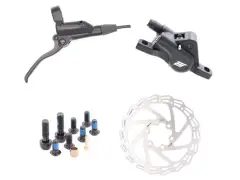
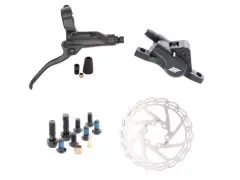


BMX Race Brakes FAQ
What are BMX Race Brakes and why is the type important?
In BMX Racing, brakes are not just for stopping after the finish line; they are essential for speed control in rhythm sections and avoiding crashes. While the UCI rules mandate a rear brake, the technology has evolved. The choice between V-Brakes and Disc Brakes depends entirely on your frame compatibility.
The Big Comparison: V-Brake vs. Disc Brake
- V-Brake (Rim Brake)
- The classic system. Lightweight, simple to maintain, and affordable.
Best for: Junior/Expert bikes, older frames, and weight-weenie builds.
Requirement: Frame needs Cantilever Studs (posts) and the Rim needs a braking surface (Machined Sidewall). - Disc Brake (Scheibenbremse)
- The modern Pro standard. Offers consistent braking power in all weather (rain/mud), better modulation, and no rim wear.
Best for: Pro/Elite riders, Carbon frames, and fast tracks.
Requirement: Frame needs Disc Tabs (Post Mount/Flat Mount) and the Hub needs a Rotor mount.
Hydraulic vs. Mechanical Disc Brakes
If you choose Disc, you have another choice:
- Hydraulic (Oil): The gold standard (e.g., Shimano MT200/SLX/XT). The system is sealed, self-adjusting (pads move closer as they wear), and offers immense power with one finger.
- Mechanical (Cable): Uses a standard brake cable. Easier to fix track-side but requires manual adjustment of pads and has slightly more friction.
Which brake fits my frame?
You cannot simply bolt a disc brake onto a V-brake frame (without sketchy adapters). Check your dropouts:
| Frame Mount | Required Brake System |
|---|---|
| Cantilever Studs (Posts) | V-Brake (Rim Brake). Standard on Mini/Junior bikes. |
| Post Mount (PM) | Disc Brake caliper bolts directly onto posts (typical for MTB/BMX Disc). |
| Flat Mount (FM) | Disc Brake caliper sits flush on the chainstay. Requires specific FM calipers or adapters. |
What size Brake Rotor do I need?
Unlike MTBs (160mm+), BMX Race bikes use smaller rotors to save weight and reduce the risk of hitting obstacles.
Standard Size: 120mm or 140mm.
Tip: Check your frame/hub clearance! Some frames accept max 120mm rotors.
How do I maintain my brakes?
- V-Brake: Keep the rim flank clean (use alcohol). Sand the brake pads lightly if they glaze over.
- Disc Brake: Never touch the rotor with oily fingers! Contaminated pads will squeal and lose power instantly. Use specific Brake Cleaner.
- Hydraulic Bleeding: If the lever feels "spongy", air is in the system. You need a bleed kit (specific to the oil type: Mineral Oil vs. DOT).
What do the specifications mean?
| Specification | Explanation | Examples/Available |
|---|---|---|
| System | Method of braking. | V-Brake, Hydr. Disc, Mech. Disc |
| Fluid Type | For hydraulic brakes only. | Mineral Oil (Shimano), DOT (SRAM) |
| Arm Length | For V-Brakes. | Mini (85mm), Pro (108mm) |
| Mount | How it attaches to the frame. | Post Mount, Flat Mount, Canti |